Programme level
Study duration
Cost per year
Study language
Our qualified and devoted faculty whose educational, career and research backgrounds are directly related to the interests and needs of those pursuing an interdisciplinary degree. Our courses will allow students to critically analyze how institutions that deal with issues of Criminal Justice impede and promote social justice.
Most courses for the Criminal Justice program derive from sociology and political science. Students are required to take courses that set the foundation and build upon their theoretical background, research methodology and practical application of criminal justice issues.
To fulfill the remaining requirements, students can choose from many different electives that focus on areas of emphasis such as Sociology of Corrections, Law & Society, or Procedural Criminal Law. Students specifically interested in designing a pre-law course of study should consult with their academic advisor.
You will participate in an internship, the internship is a supervised criminal justice related work experience.
Not only do students experience, firsthand, the possibilities and limitations of engaging in justice-focused fields, but internships often provide networking which could lead to future career opportunities. Former students have completed internships at local police departments, the state attorney’s office, juvenile detention centers and law firms.
Clubs, Associations and Organizations
Join one of the many clubs or organizations for sociology and criminal justice. There are student-led groups that provide the forum for students to meet fellow majors, discuss issues relating to Criminal Justice, plan future events and interact with faculty.
Global Justice Series
Every year, faculty schedule events of particular interest to Criminal Justice majors. Past speakers have included law enforcement professionals, probation officers, prison ministry staff, gang members, and academic researchers studying in areas such as prisons, the military and gangs. Events also include documentary screenings and discussions on pertinent films including those related to military operations, prison torture and human rights.
The Certification in Policing is one of the only programs that consist of courses specific to the critical analysis on police culture, officer decision-making, and community-based ideas for change. This certification will bridge the rigor and critical thinking skills expected in a sociology and criminal justice academic program with the issues and concerns currently affecting police and criminal justice-related institutions.
Students will be provided with a strong skill set if they choose to become an officer in policing, probation, correctional or parole systems. The courses required for this certification will best prepare future police recruits in the areas often limited in the police academy including:
These skills will also prove beneficial to those who desire to study or work within organizations whose members are impacted by police, such as anti-violence, prisoner reintegration and social justice programs. For students who desire to attend graduate school after they finish with their undergraduate program at CUC, this certification will lay a firm foundation for programs such as law, sociology, criminal justice, peace studies, social justice, women’s and gender studies or other social science disciplines.
Majors and minors may acquire the certification by taking the required (1) and elective (3) courses denoted in bold below.
REQUIRED MAJOR COURSES - 36 HOURS
CHOOSE 12 HOURS FROM COURSE WITH SOC/CRJ PREFIX
Electives (12 hours) Any courses not taken above
Alpha Kappa Delta - International Sociology Honors Society
Membership in Alpha Kappa Delta is an earned honor. Once you join, you become a lifetime member. Your membership may be used on your resume, applications for graduate school, and job applications.
Membership is limited to students in sociology, criminal justice, or social work who have maintained a record of high academic achievement. The purpose of Alpha Kappa Delta is to seek to acknowledge and promote excellence in the scholarship in the study of sociology, the research of social problems, and such other social and intellectual activities as will lead to improvement in the human condition.
Requirements to Join:
American Correctional Association, CUC Chapter
Membership is open to all individuals and organizations with interest in the correctional field. The American Correctional Association is the largest international organization interested in correction-related scholarship, networking, research and professional standards. This group receives information and field trip invitations to state and national prisons not available to regular classroom groups. Interested students can attend full-day, extended field trips and even participate in correctional officer, warden and counselor job shadowing.
In 2010, Concordia University Chicago welcomed our first ever chapter of the American Correctional Association, the largest international organization interested in correction-related scholarship, networking, research and professional standards.
Benefits of ACA membership:
Chicago
Concordia University Chicago
Criminal Justice (BA)
Social Sciences, Law & Governance
Bachelor
English
48 months / 8 semesters
01 Apr 2027
| Study mode | Workload | Duration | Cost per year | Total cost |
|---|---|---|---|---|
 On-campus
|
Full-time | 48 months | 9,710$ | 38,840$ |

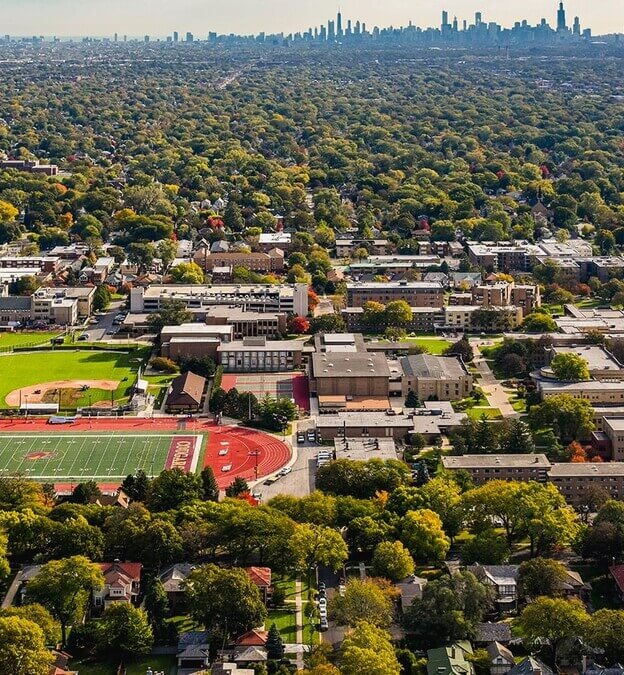
A career-focused university combining academic excellence, practical learning, and a supportive community to prepare students for success in a global and evolving world.
 USA
USA

 Level:
Bachelor
Level:
Bachelor
 Language:
English
Language:
English
 Duration:
48 months
Duration:
48 months
 Cost per year:
9,710$
Cost per year:
9,710$
 Next admission:
01 Apr 2027
Next admission:
01 Apr 2027
 Location:
On-campus
USA
Level:
Bachelor
Language:
English
Duration:
48 months
Cost per year:
9,710$
Next admission:
01 Apr 2027
Location:
On-campus
USA
Level:
Bachelor
Language:
English
Duration:
48 months
Cost per year:
9,710$
Next admission:
01 Apr 2027
Location:
On-campus
Location:
On-campus
USA
Level:
Bachelor
Language:
English
Duration:
48 months
Cost per year:
9,710$
Next admission:
01 Apr 2027
Location:
On-campus
USA
Level:
Bachelor
Language:
English
Duration:
48 months
Cost per year:
9,710$
Next admission:
01 Apr 2027
Location:
On-campus
 USA
Level:
Master
Language:
English
Duration:
12 months
Cost per year:
19,620$
Next admission:
28 Sep 2027
Location:
On-campus
USA
Level:
Bachelor
Language:
English
Duration:
48 months
Cost per year:
17,610$
Next admission:
21 Sep 2027
Location:
On-campus
USA
Level:
Master
Language:
English
Duration:
12 months
Cost per year:
11,160$
Next admission:
08 Jun 2027
Location:
USA
Level:
Master
Language:
English
Duration:
12 months
Cost per year:
19,620$
Next admission:
28 Sep 2027
Location:
On-campus
USA
Level:
Bachelor
Language:
English
Duration:
48 months
Cost per year:
17,610$
Next admission:
21 Sep 2027
Location:
On-campus
USA
Level:
Master
Language:
English
Duration:
12 months
Cost per year:
11,160$
Next admission:
08 Jun 2027
Location:
 Online
Please enter your details to connect with a PKHUB Advisor

 Whatsapp